Anatomy Building
Building a better future for tomorrow
Building Type
Size
Location
Softwares Used
Anatomy of Science building
2,800 m²
A’Beckett Urban Square RMIT Melbourne, Australia
Revit, Rhino, Twinmotion
Anatomy Building
Building a better future for tomorrow
Building Type
Size
Location
Softwares Used
Anatomy of Science building
2,800 m²
A’Beckett Urban Square RMIT Melbourne, Australia
Revit, Rhino, Twinmotion
About
About
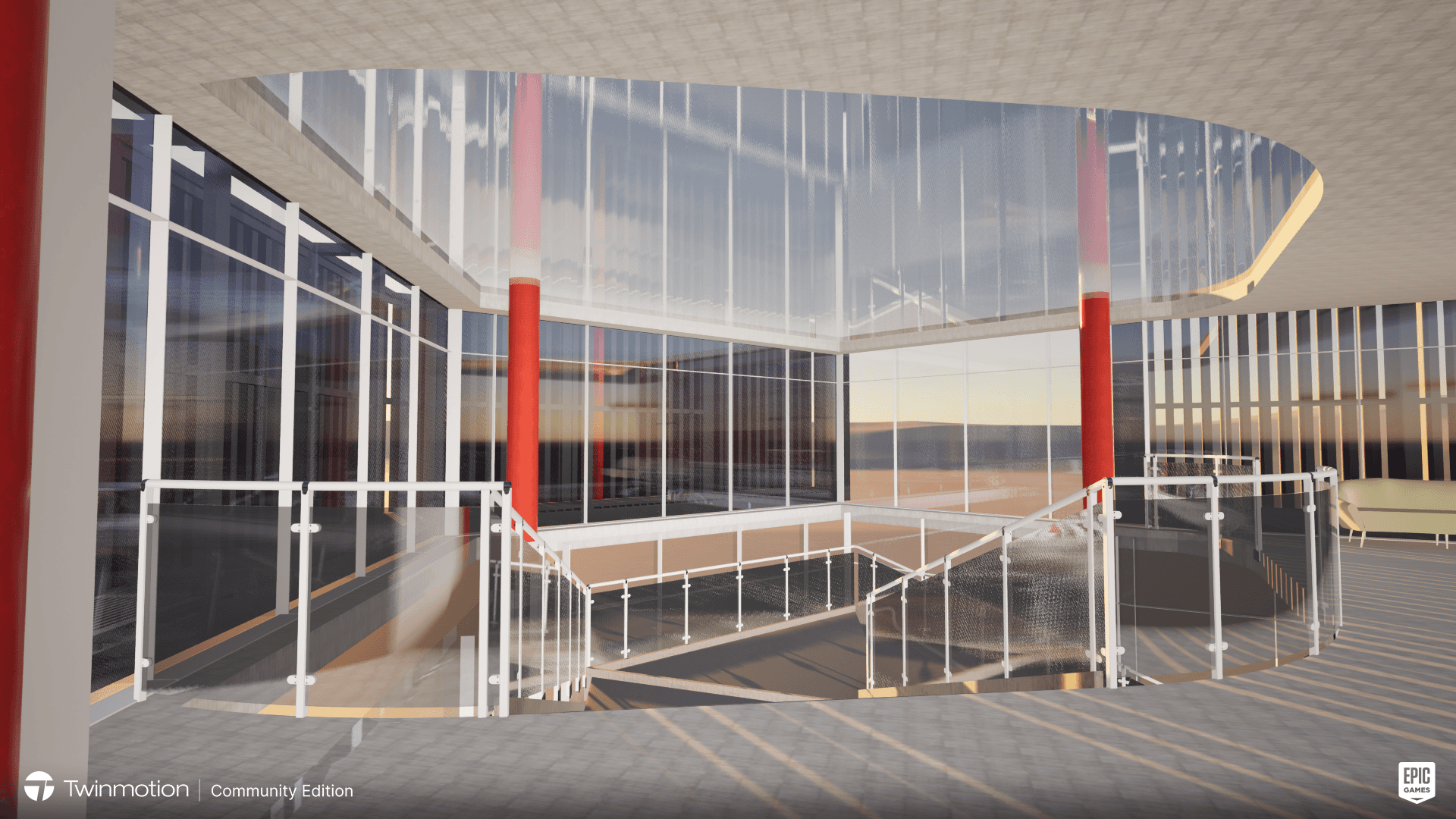
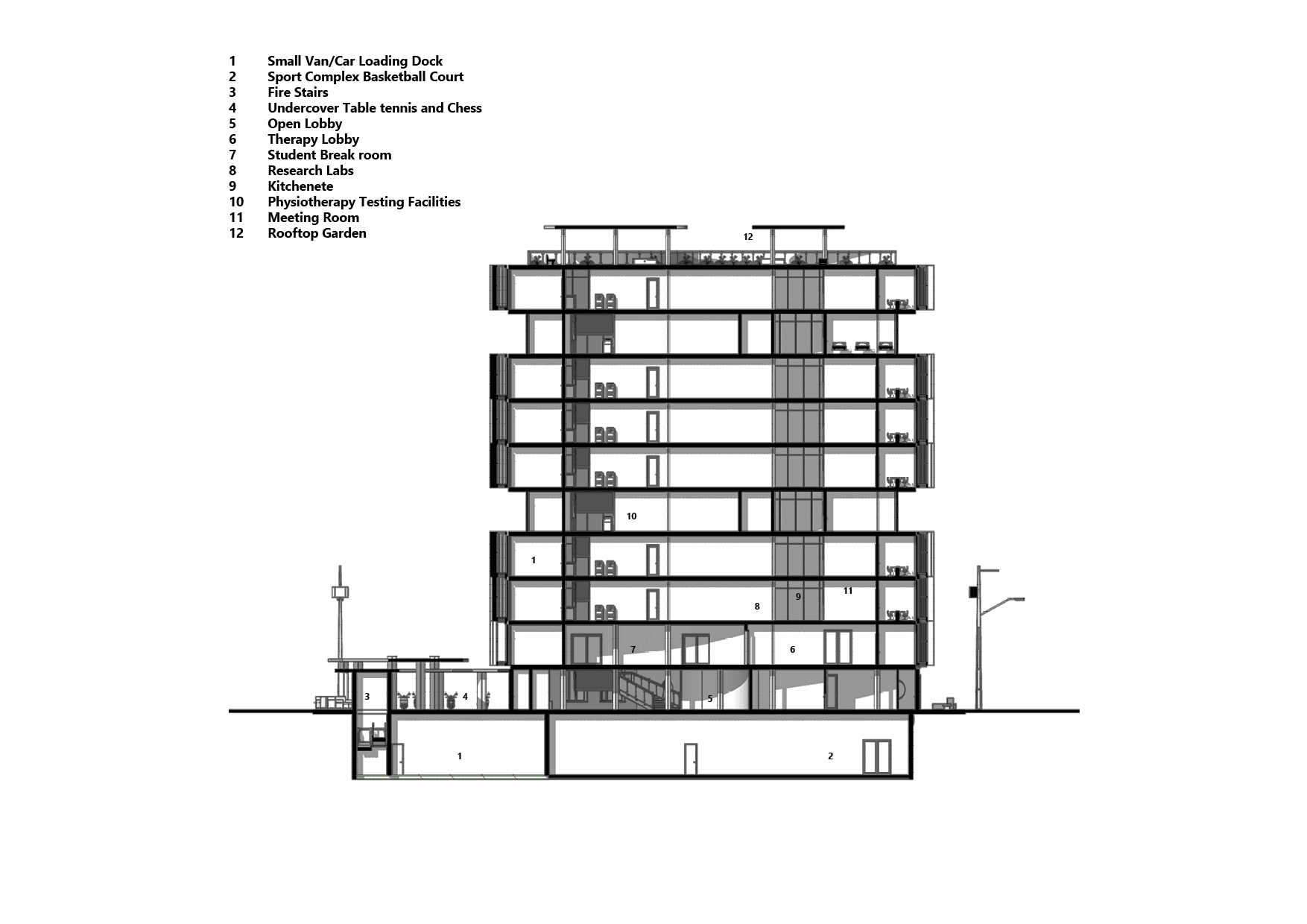
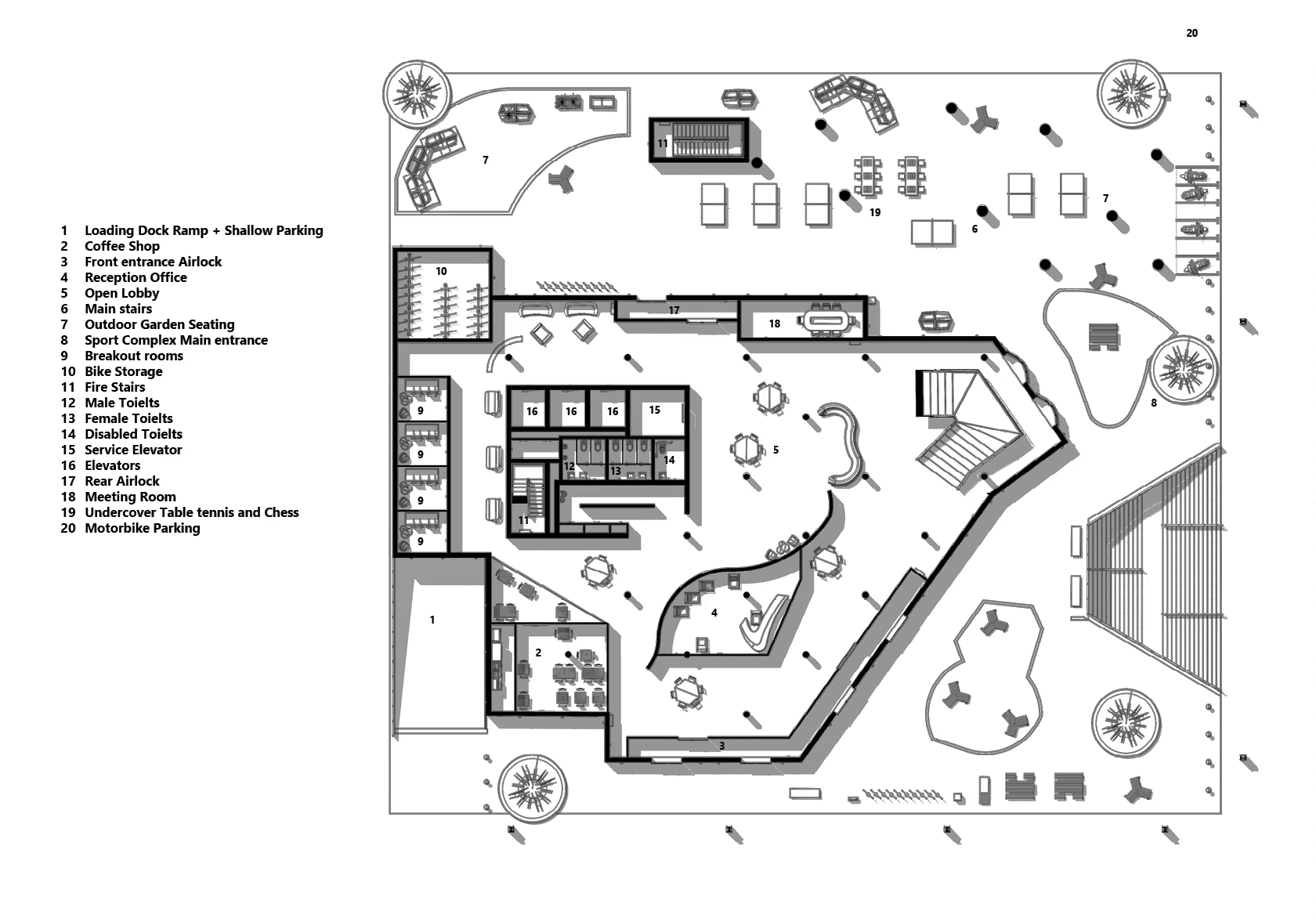
The ground floor is arranged to balance public openness with moments of privacy and retreat. The lobby, coffee shop and garden seating form a welcoming civic edge, encouraging movement and gathering while giving the building a strong public presence. The sports entrance and recreational areas extend this atmosphere, supporting informal social life.
Service functions sit more quietly along the edges, including parking, loading access, bike storage and the rear airlock. Amenities and circulation are placed with clarity so private or task-focused areas remain discreet but easily reached. The meeting room and breakout spaces provide controlled environments for quieter work. Through these choices, the plan creates a fluid gradient from active communal spaces to more private zones, ensuring the building remains both open to its community and attentive to individual needs.
The ground floor is arranged to balance public openness with moments of privacy and retreat. The lobby, coffee shop and garden seating form a welcoming civic edge, encouraging movement and gathering while giving the building a strong public presence. The sports entrance and recreational areas extend this atmosphere, supporting informal social life.
Service functions sit more quietly along the edges, including parking, loading access, bike storage and the rear airlock. Amenities and circulation are placed with clarity so private or task-focused areas remain discreet but easily reached. The meeting room and breakout spaces provide controlled environments for quieter work. Through these choices, the plan creates a fluid gradient from active communal spaces to more private zones, ensuring the building remains both open to its community and attentive to individual needs.
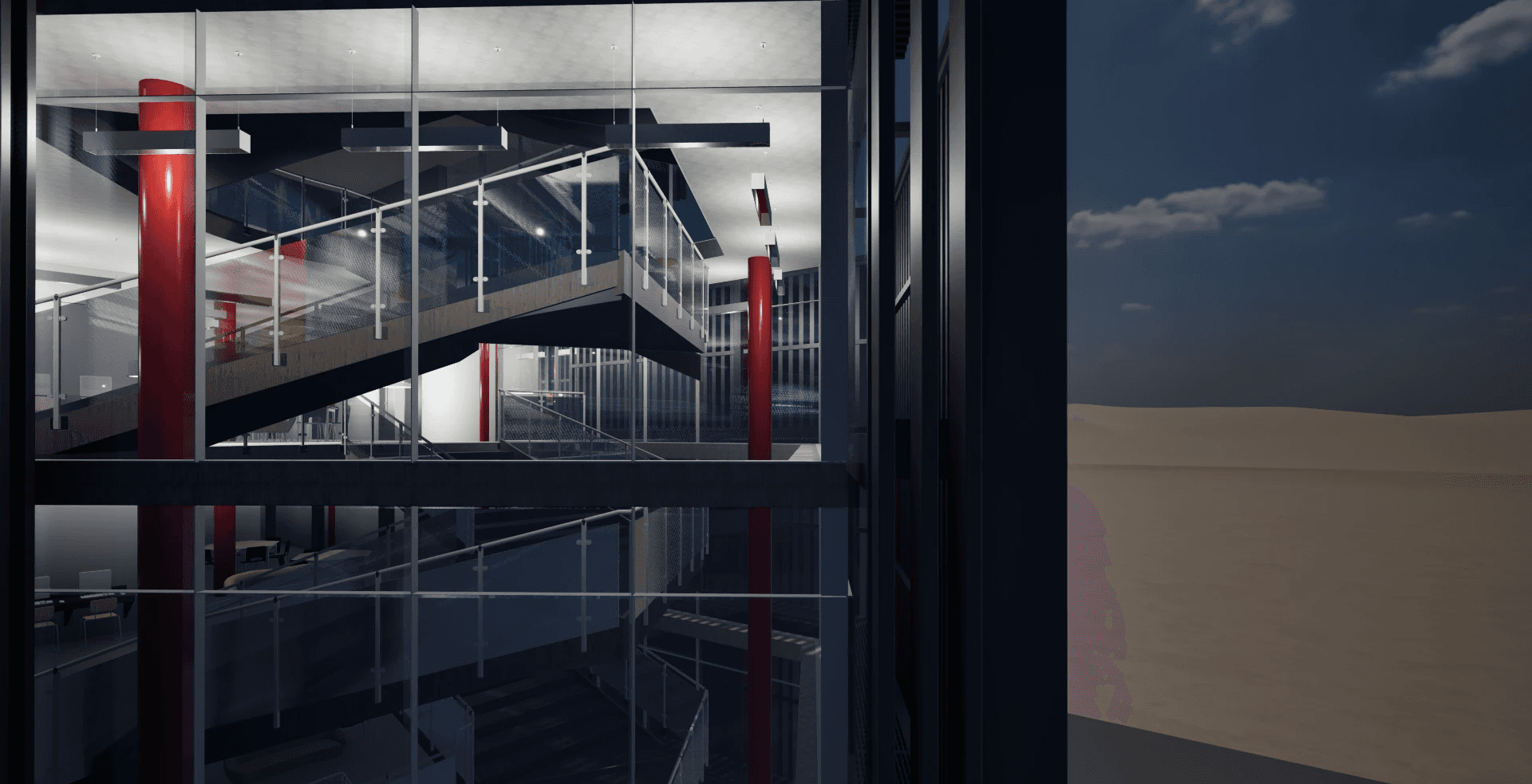
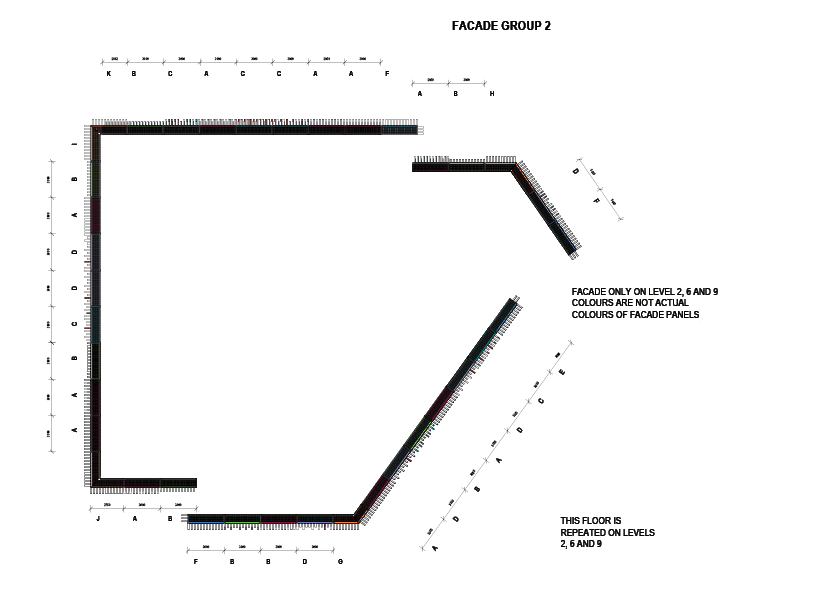
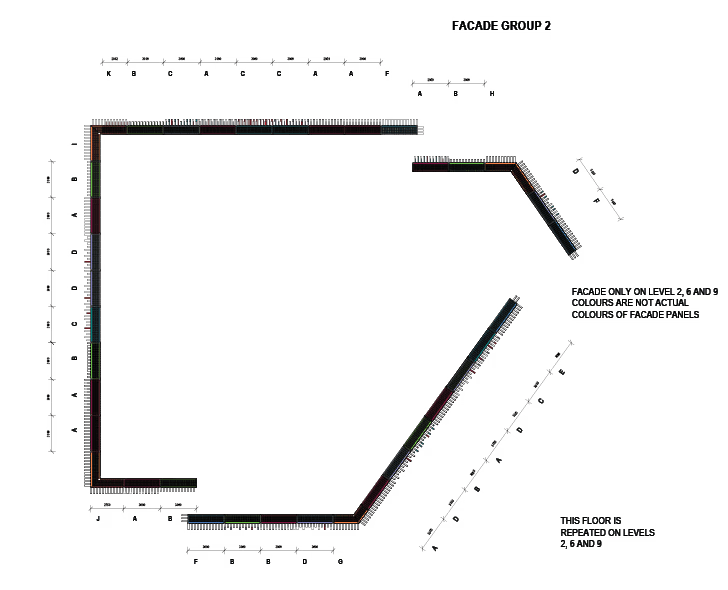
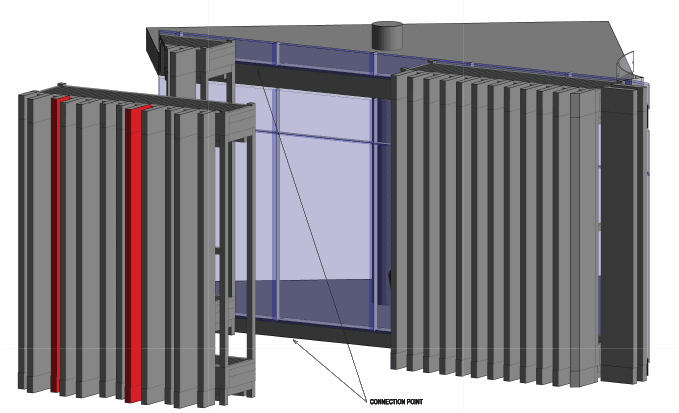
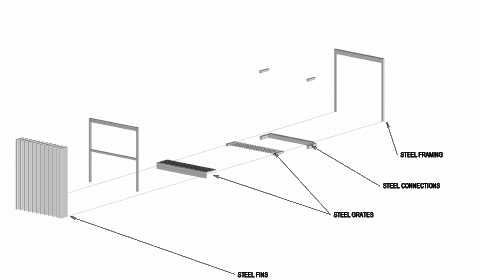
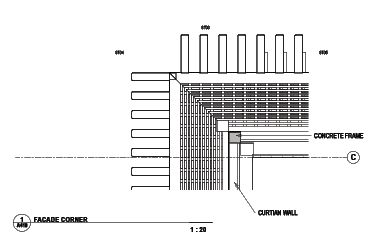
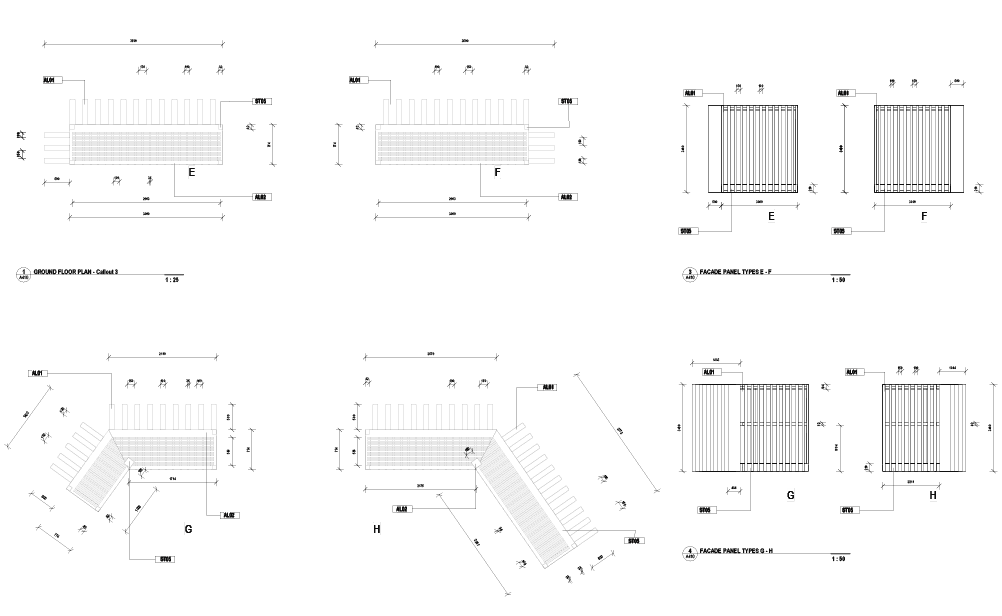
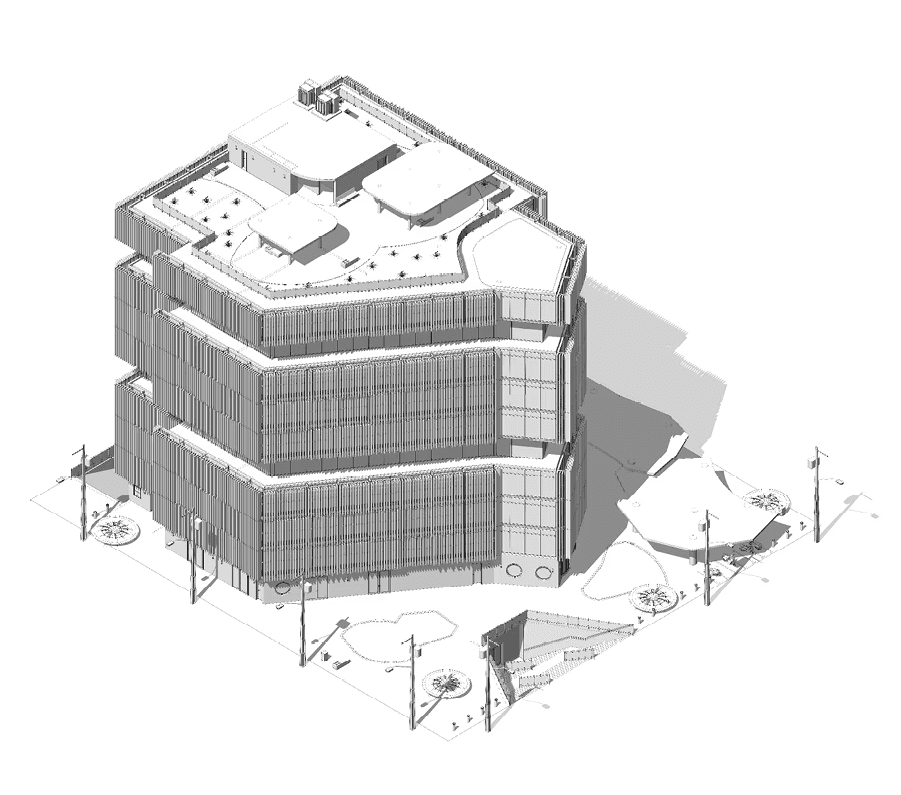
The facade is the main body of this building, providing character and design colors. The aim is to build parametrically a system to connect the parts repeatedly and arrange them to build unique forms with varying depths and distances of steel beams. The modular blocks are all arranged in sequence among the building's floors and construct three varying layers of facade design. These three block layers are the ones which are arranged vertically on the building, varying in order. This order and process was built from parametric scripting to enhance the light and heat inside the building depending on the type of rooms inside and the surrounding context buildings which provide large sun blockages throughout the year, hence the openings within the facade.
The facade is the main body of this building, providing character and design colors. The aim is to build parametrically a system to connect the parts repeatedly and arrange them to build unique forms with varying depths and distances of steel beams. The modular blocks are all arranged in sequence among the building's floors and construct three varying layers of facade design. These three block layers are the ones which are arranged vertically on the building, varying in order. This order and process was built from parametric scripting to enhance the light and heat inside the building depending on the type of rooms inside and the surrounding context buildings which provide large sun blockages throughout the year, hence the openings within the facade.